MERWEVILLE HISTORY
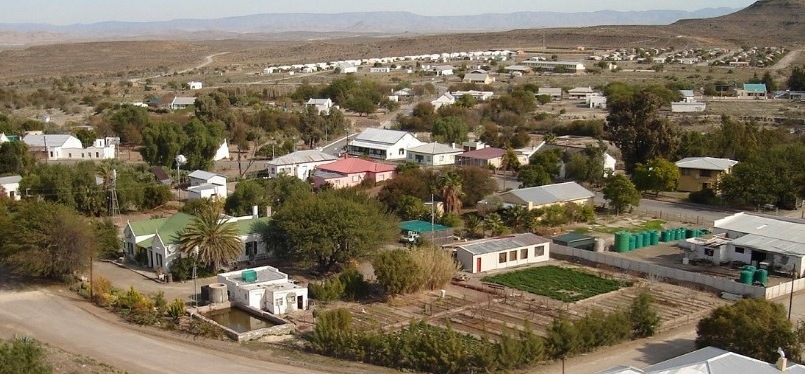
The small village of Merweville lies in the area of the Great Karoo known as the Koup. It is an arid area with an average rainfall of 150mm. Thus water is a serious natural resource that is treated with respect. The town and the surrounding farms rely on subterranean water which is extracted via pump. Wind, solar and electrical pumps bring the water to the surface.
The Beaufort West Parish of the Dutch Reformed Church, during the 1800s served a geographic area in excess of 30,000 square kilometers. In order to attend “nagmaal” or communion the local residents and their families would need to travel more than 120-kilometres to Beaufort West.
In 1897, with the support of the Dutch Reformed Church Reverend in Beaufort West, Pieter van der Merwe, the local farmers appealed to the church authorities to create a new parish. An offer was made to purchase a portion of the farm Vanderbylskraal from its owner, Johannes Jacobus Le Seur van der Byl. The sale was concluded for the sum of £4,500 and from this transaction the village of Merweville was born and named in honour of Reverend van der Merwe from Beaufort West.
The outbreak of the Anglo Boer War in 1899 interrupted the establishment and development of the village and it was only in 1905 that the land was transferred to the church and the village was formally established.
In the early days most of the economic activity in town centered around the homestead of van der Byl. In addition to houses and cottages surrounding the main house, there were store rooms, stables, sheds, a shop and post office. The farm often hosted post coach passengers. There was also a small police station and a jail. As the locally appointed magistrate, Van der Byl heard cases on petty offences and infringements of the law. He imposed fines, punishments and short-term sentences which were served in the farm jail.
There are four access roads into the town and the 44km road, built in 2015, from the N1 at Prins Albert Road is beautifully tarred and pothole free. The others are gravel roads that are generally in a good condition. Due to Merweville being off the fast moving beaten track it has been possible to maintain a jealousy guarded old world charm and pace. Here the businesses still close for lunch!
Visitors to the town may be surprised by the lack of street lights, that is by design, when the residents, in 1998 when the Eskom power was laid on, chose to not have streetlights.
Today the mainly sheep farming community is the backbone of the town’s economy. Most if not all of the business in town interact with farmers and their workers on a regular basis. The most common farming activity is sheep and here they farm with Dorpers, a pure South African breed, and Meat Masters. Other animal farming activities are Goat and Game. Onion, Lucerne, Oranges and Olives are also cultivated. With the unfortunate but well known drought cycles farmers need to diversify to endure in this harsh farming environment. They have learnt to work with nature and not against it.
Change comes slow to Merweville, a town where the silence is audible and the air fresh.
The less than 2000 residents cherish and treasure their lifestyle.
LETTERKOP
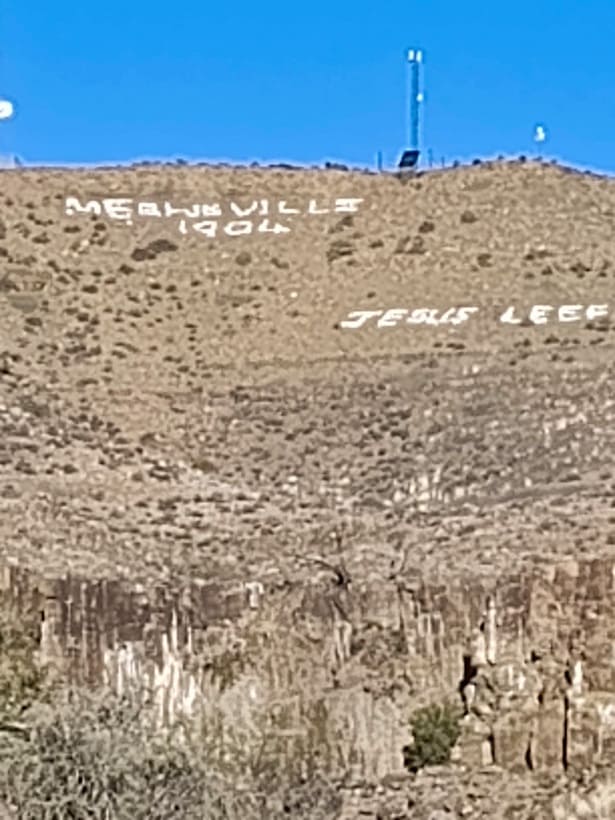
“MERWEVILLE 1904" is volgens oorlewering met die stigting van die dorp uitgepak. Die letters is later vergroot soos wat dit vandag daar uitsien. In 2002, met die oprigting van die selfoontoring, is die pad sodanig verbeter dat dit meer toeganklik is vir inwoners en besoekers. Die sonsondergang van daarbo is asemrowend.
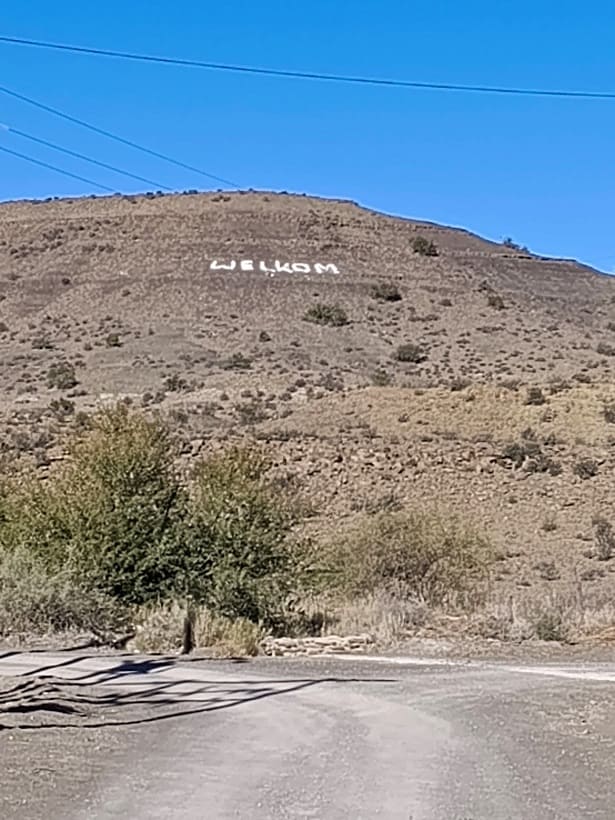
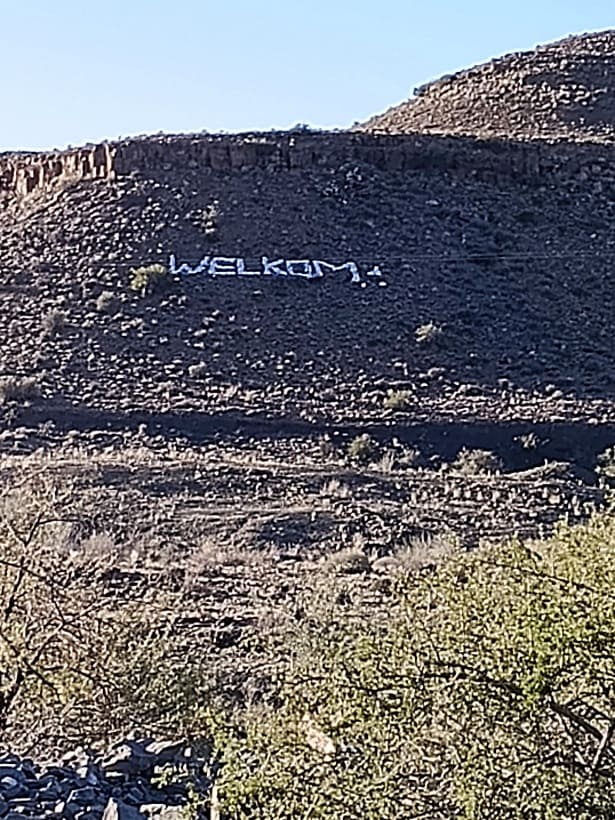
“WELKOM” is in 1918 deur F. Mocke aan die noordoostekant van die gruiskop met klippe gepak en wit gekalk. Hierdie was gedoen vir die eerste Ringsitting te Merweville, wat weens reën, nooit plaasgevind het nie.
“JESUS LEEF” is in 1998 met die besoek van die Diensjaarspan uitgepak.
DIE KRUIS op die hange van Letterkop is deur ds Lourens van Vuuren, Johan Marais en Antonie (Hans) Botes opgerig. Die beligting van die kruis is moontlik gemaak deur Pieter van der Bijl, agterkleinseun van die oorspronklike eienaar van Van der Bijlskraal. Ongelukkig is die kragkabel gesteel en is dit saans nie meer sigbaar nie.
“WELKOM” is ook op die suidekant van die kop uitgepak. Inligting word nagevors.
ENGLISHMAN’S GRAVE
16 APRIL 1902 - RIP
At the time of writing this article it is 123 years since the passing of Walter Oliphant Arnot.
The Englishman's Grave lies in a secluded spot just outside Merweville on the road to Prince Albert Road. Walter Arnot, was the son of Dr Henry Arnot, MD RN. Born 9 September 1860 in Essex, England. He was educated at the Royal Naval School in New Cross, London. At the age of nineteen he moved to Australia to take up sheep farming and by the age of 20 was managing a large sheep station.
During the next eight years he held similar positions on other major sheep stations and was complemented on his stock management practices during a long drought. In 1888 he joined A Battery Field Artillery in Adelaide and was married in the same year. When the Anglo Boer war broke out in 1899 he joined the 3rd South Australian Contingent - the South Australia Bushmen Corps, as a sergeant. The Corps specialised in scouting and intelligence gathering. He arrived in Africa at the port of Beira in Portuguese East Africa and was promoted to lieutenant.
In April 1902 Lieutenant Arnot found himself in the Laingsburg district and was engaged in a scouting patrol. He was accompanied by Private John Sparkes, of the 16th Lancers, who was stationed at Laingsburg and in charge of the Intelligence Department's horse unit and Abraham January, a scout and resident of Laingsburg. The patrol spent the first night at Blaaubank farm and rode on to Dwars River farm, near Sutherland, to interview Jacobus Adriaan Victor, the only person in the district who spoke English.
At the inquest Victor said Arnot had been in "good spirits and quite jolly". But soon after that his mood seemed to change. He sank into a deep depression as the patrol rode via Modderfontein, Desyver and Van Wyksberg farms to Prince Albert Road. By the 15th of April, as Jacob stated at the inquest, "Arnot was not in his usual mood. He was very quiet and withdrawn. He had been particularly disturbed the previous night."
Just outside the tiny village of Merweville he took his rifle and a cartridge and walked towards a small hill. His companions thought he was going to shoot a bird as he had done before. Suddenly Abraham January shouted: "He's going to shoot himself!" Before they could reach him, he pulled the trigger. The inquest found he had died from a self-inflicted gunshot wound "while in a state of temporary derangement."
IN MEMORY
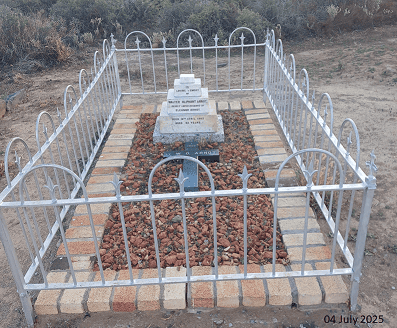
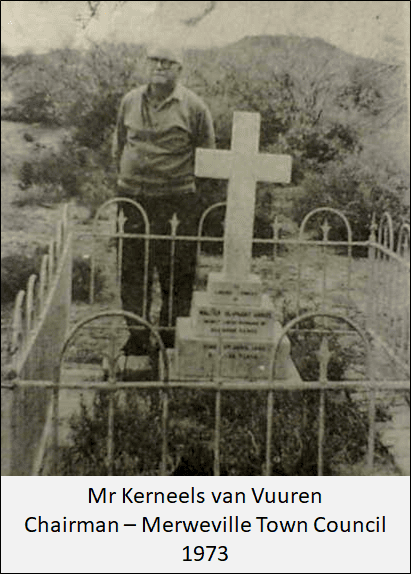
His wife funded and arranged for the grave headstone and the iron railing around the grave. The town undertook to look after the grave.
To this day the town of Merweville has kept their promise and the grave is regularly maintained by unnamed persons. The grave was vandalised a few years ago and the upright marble cross broken. One of the residents had a new granite cross made that has been laid in front of the headstone.
Look out for the “Engelsman se Graf” signboard as you leave the town towards Prins Albert Road. There are a few steps down from the road and then an easy 100m walk on a cleared path to the grave.
Photographer: Unknown